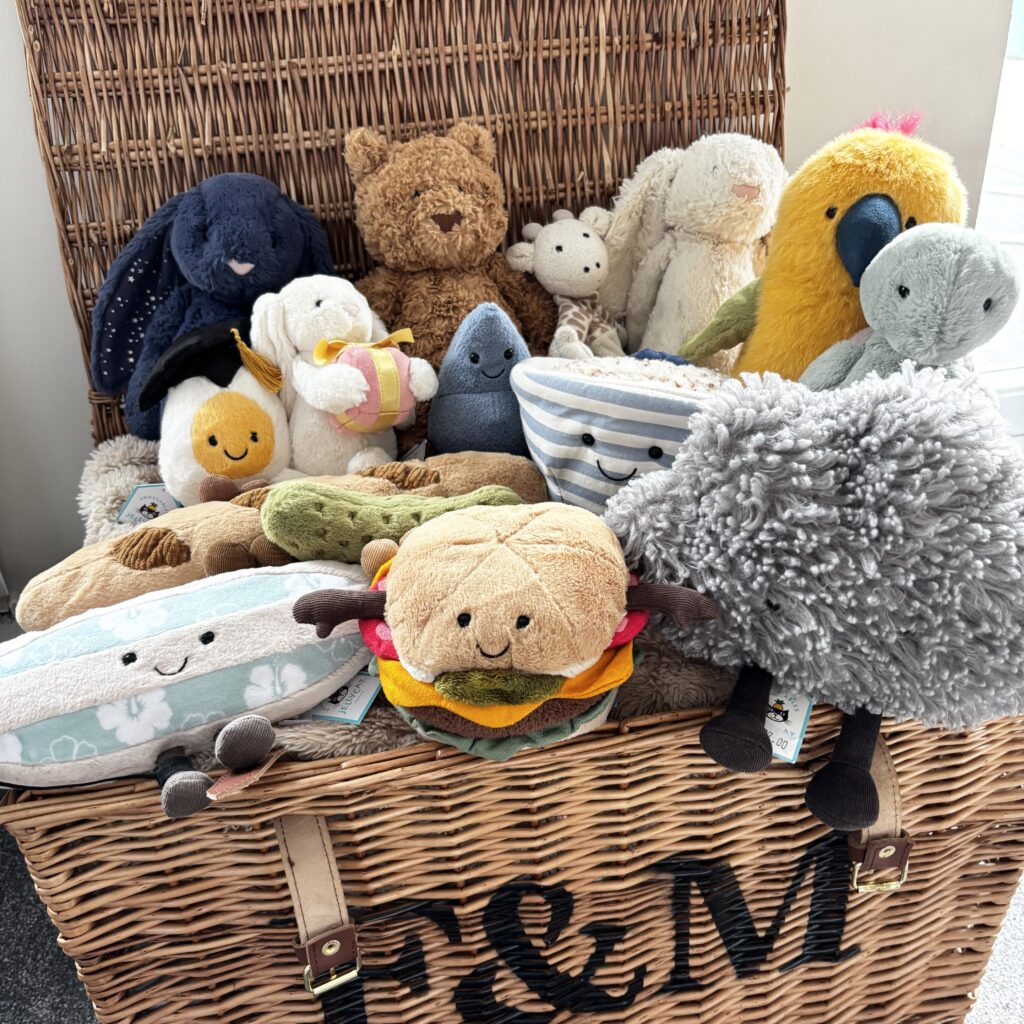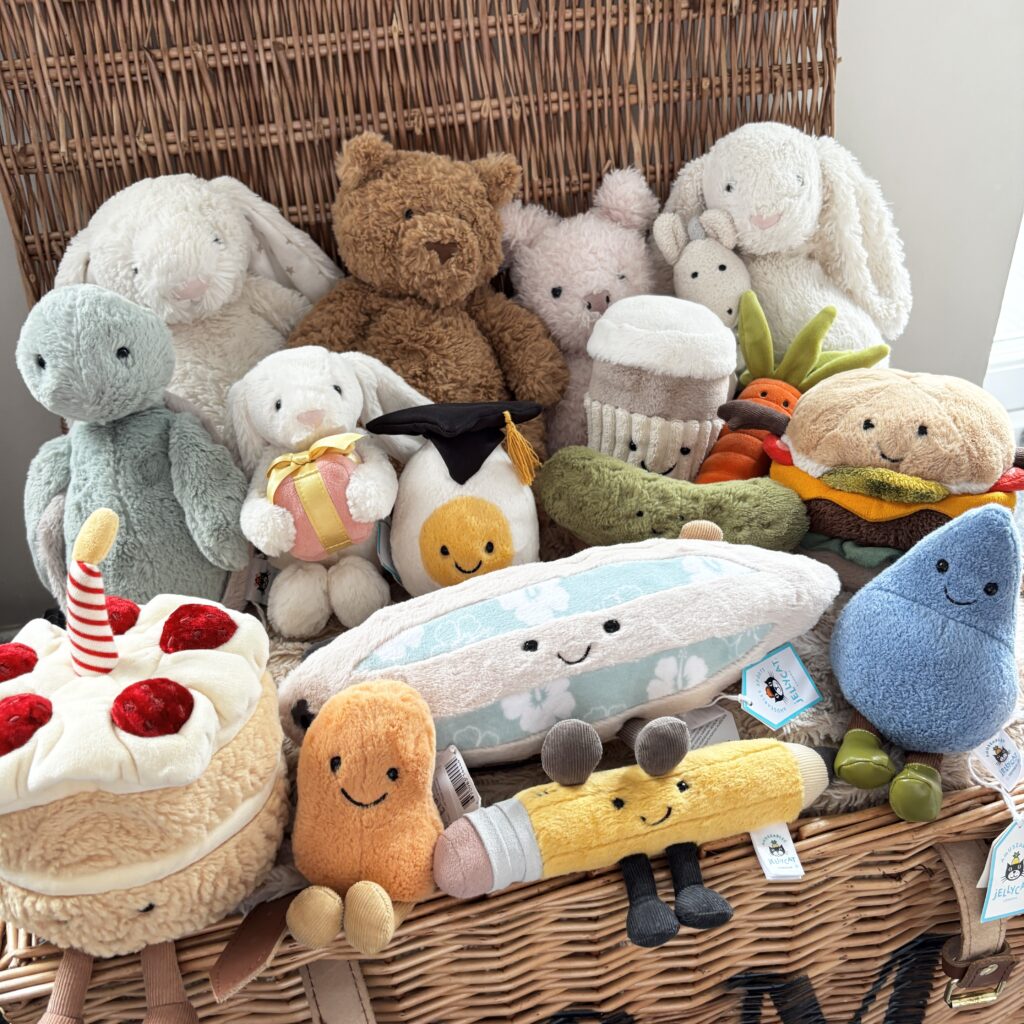
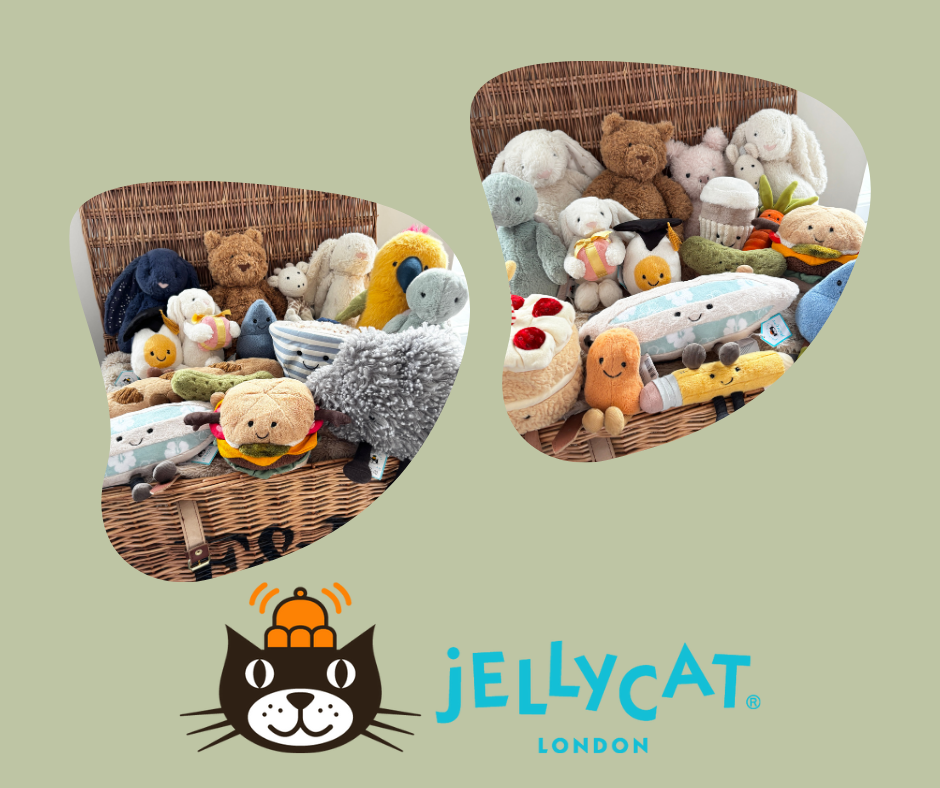
We first started buying Jellycats about 12 years ago – the very first ones were a comforter and a classic Bashful Bunny. Fast forward about four years ago, the love for Jellycat was rekindled, and since then the collection has slowly grown. Ours is still fairly modest compared to some of the incredible collections I’ve seen online, but we thought it would be fun to share a few tips on spotting fakes! When you’re buying for two, Jellycat collections can get quite costly, which is why it’s so important to be extra careful.
When it comes to buying, we always stick to trusted retailers – places like nice garden centres, independent gift shops, or bigger stores such as Harrods and Selfridges. If you’re ever unsure whether a shop is legit, it’s worth checking Jellycat’s official website for a list of stockists near you.
The Tags
The hang tag – Genuine Jellycats come with a nice, thick paper tag. It feels solid in your hand, and the logo is crisp and clean. If the tag feels flimsy, the writing looks fuzzy, or the blue edging looks washed out, that’s usually my first clue it’s not right.
The fabric label – Check the little sewn-in tag. On real ones, the text is sharp and clear, often with short codes like JELLY or JCINC. You’ll usually see CE or ASTM marks too (those are the safety standards). Fakes sometimes have weird spelling mistakes, blurry text, or random lines of characters that just don’t belong there.
The Feel
This is a big giveaway. A real Jellycat is super soft – like, “you can’t stop touching it” soft. Fakes? Not so much. They can feel rough, thin, or even lumpy inside from uneven stuffing. It’s one of those things where, once you’ve hugged a real one, you just know. But there are some really good dupes, so if you find one that feel equally soft, take a closer look at the labels and stitching.
Stitching & Face Details
The stitching on a genuine Jellycat is neat and tight. Everything, eyes, nose, mouth – sits exactly where it should. Counterfeits often look a little “off”: eyes too far apart, noses crooked, seams coming loose.
Proportions & Shape
Every Jellycat has its own quirky proportions. For example, Bashful Bunnies always have long arms and legs. If the limbs are oddly short or the head looks oversized, that’s a red flag. Sure, genuine Jellycats can vary slightly depending on the year or batch, but if the shape looks way off, it’s probably not real.
Colours can be tricky too. Some real ones do come in slightly different shades (older versions especially), but if the color looks totally wrong, I’d be cautious.
Safety Labels
This one’s simple: real Jellycats always include proper safety marks like CE, UKCA, or ASTM. If they’re missing, badly printed, or look fake, don’t risk it.
Packaging & Extras
Even the packaging can give it away. Genuine Jellycats usually arrive in decent-quality bags or wrapping. I’ve noticed some fakes come in flimsy bags, or the keyring versions feel cheap compared to the real thing.
Where You Buy
This is honestly the biggest tip! Buy from trusted places. The official Jellycat site or authorised retailers are the safest bets. If you’re browsing online and see a “too good to be true” deal, it probably is.
Real vs Fake
| Feature | Real Jellycat | Fake Jellycat |
|---|---|---|
| Hang Tag | Thick, crisp, sharp logo, accurate text | Flimsy, blurry, wrong font or color |
| Fabric Label | Clean text, correct batch codes (JELLY, JCINC, EC, etc.), safety marks | Smudged, misspelled, inconsistent codes or missing info |
| Texture/Material | Super-soft, plush, even stuffing | Rough or thin fabric, lumpy or uneven stuffing |
| Stitching & Build | Neat, secure features, well-aligned | Loose stitching, misaligned features |
| Proportion & Color | True to official design, consistent with minor design evolution | Odd size, mismatched colors, distorted features |
| Safety Marks | Present and clear (CE/ASTM) | Absent or poorly printed |
| Packaging/Keyring | Correct bag color and material, accurate keyring branding | Lighter bags or strings, copycat keyrings |
| Seller Source | Official website or authorized retailers | Suspicious deals, no proof of purchase |